
Material Health
Materials are assessed in terms of their impact on people and the environment.
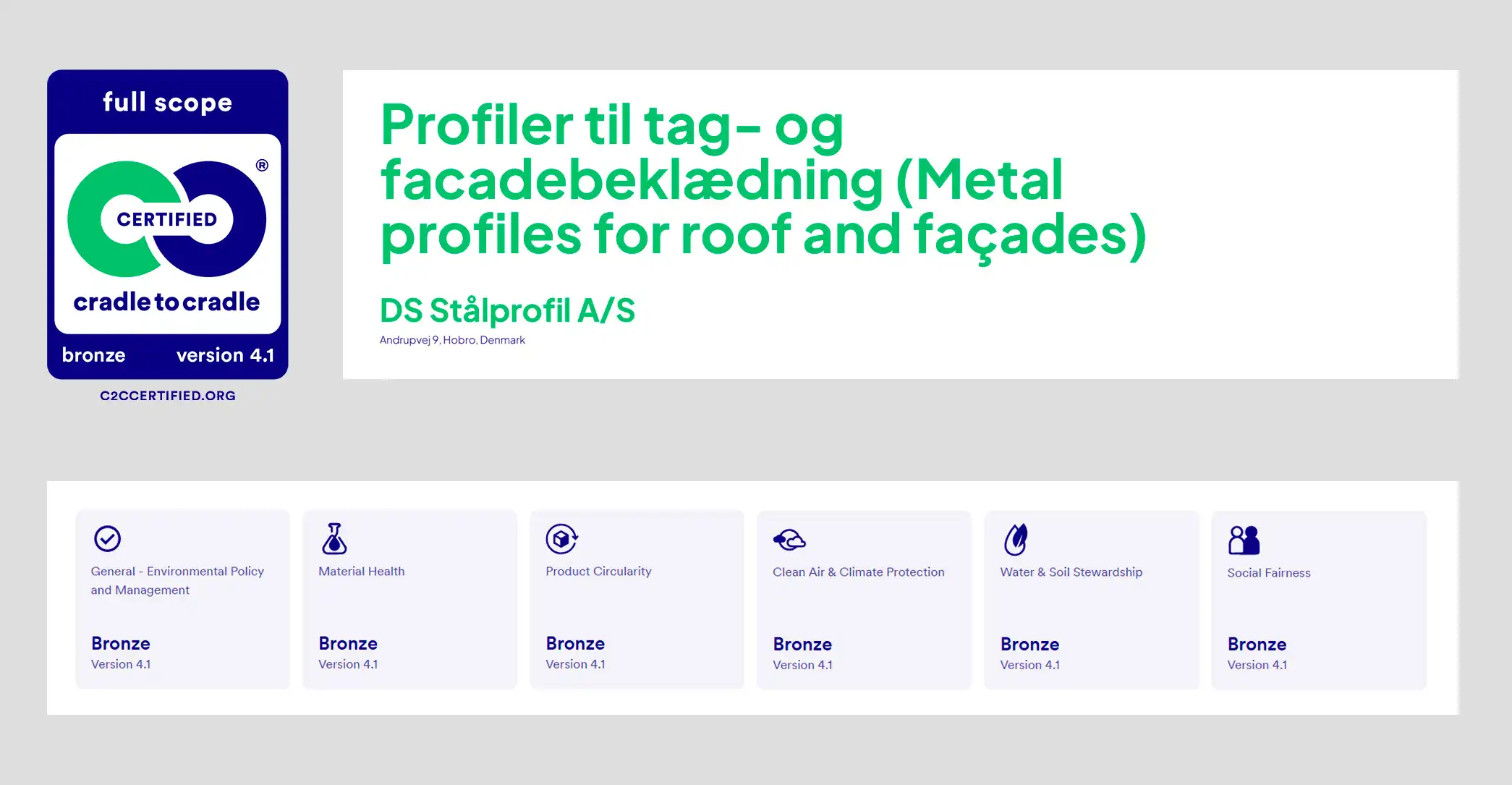
Cradle to Cradle Certified® is an international certification that assesses products according to a range of specific criteria relating to materials, production, recycling, climate and social conditions. The certification is verified by an independent third party. The assessment is based on established requirements in five areas, which together provide an overall picture of the product’s properties and impact.
Materials are assessed in terms of their impact on people and the environment.
Products and processes are designed to increase recycling and promote circular material flows.
Production is assessed in terms of emissions and energy consumption, including the use of renewable energy.
Production is assessed in terms of its impact on water and soil resources.
Manufacturers are assessed in terms of social conditions, including human rights.
Circular economy
The circular economy is about reducing resource waste by designing products and materials so that they can be reused or recycled to a greater extent. This includes focusing on material selection, chemical substances and the increased use of renewable energy.
Circular value chains
DS Stålprofil works with suppliers and partners to develop solutions that allow materials to remain in circulation. Recyclable and renewable materials are increasingly being used, alongside initiatives such as take-back schemes.
Cradle to Cradle
DS Stålprofil has achieved Cradle to Cradle Certified® Bronze certification for steel profiles used for roofing and facades. The certification is based on a third-party assessment. The products include GreenCoat®, in which some of the fossil-based oil has been replaced with bio-based oil.
Development
Cradle to Cradle is a dynamic standard, and the company is working on continuous improvements with the aim of achieving higher certification levels.
To maximise the lifespan of your new steel cladding, it is essential that you choose a surface coating capable of withstanding the climatic conditions found in your particular local area. If you also require a high level of UV resistance, this should be taken into consideration as well.
Please contact our sales department if you would like advice on choosing a surface type. Or simply choose the best one.
| Product/Surface | GreenCoat Pural BT | GreenCoat Pural BT Matt | GreenCoat Pro BT Matt | Aluzinc AZ 185+ | Copper | COR-TEN® |
| Corrosion resistance according to EN 10169-2 | RC5+ | RC5+ | RC5 | RC4 | – | – |
| Corrosion resistance | Excellent | Excellent | Very good | Very good | Excellent | Fair |
| Scratch resistance | Excellent | Excellent | Very good | – | Excellent | Excellent |
| UV resistance | Ruv4 | Ruv5 | Ruv3 | – | – | – |
| Ease of cleaning | Very good | Very good | Good | – | – | – |
| Gloss level (Gardner 60º) | 40 | <5 | 10 | – | – | – |
| Surface texture | Lightly textured | Lightly textured | Textured | – | Smooth | Textured |
| Surface thickness µm | 50 | 50 | 36 | – | – | – |
|
Reverse-side coating |
Grey | Grey | Grey | Aluzinc | – | Corten |
| Perforation corrosion warranty | 50 years | 50 years | 40 years | 20 years | 80 years | 25 years |
A steel sheet’s ability to withstand corrosion and rust is referred to as its corrosion resistance. Based on international standards, all surface treatments can be classified according to their ability to resist this corrosion. Among other things, the standard specifies the sheet’s performance within different product flexibility classes, corrosion protection classes and UV resistance classes.
Previous assumptions that a thick surface treatment necessarily provides good corrosion resistance are no longer relevant following the introduction of a new range of surface treatments. Rather than focusing on the thickness of the surface treatment, far greater emphasis should be placed on the level of corrosion resistance it provides.
All DS Stålprofil surfaces are PVC-free. This forms part of our material selection process when developing products.
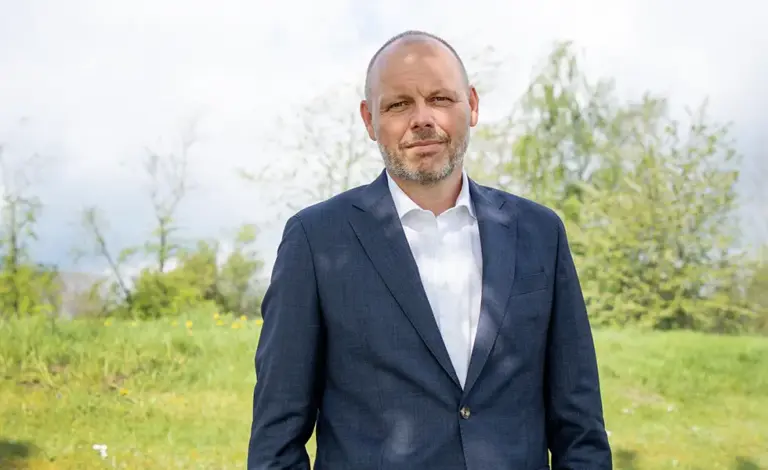
“We work systematically to reduce the environmental impact of our production and develop our steel products with a focus on resource efficiency. Our efforts include optimising material use and continuously improving our production processes.
We were among the first in Denmark to introduce GreenCoat® steel products, and today we use Cradle to Cradle principles as a structured approach to product development. This provides us with a concrete basis for making demonstrable improvements and prioritising our efforts over time. At the same time, we use the UN Sustainable Development Goals as an overarching framework for our strategic work.”
“We focus on reducing CO2 emissions from our activities and increasing the proportion of materials that can be incorporated into circular systems. We also work to integrate more renewable energy into our production where technically and financially feasible. Our Cradle to Cradle Certified® certification documents specific product criteria and forms part of our overall development work.”
Michael er klar til at rådgive dig!