
Careers
25 Nov 2026
News
Publiceret
05 November 2024
Sidst opdateret
18 November 2026
3 minutter
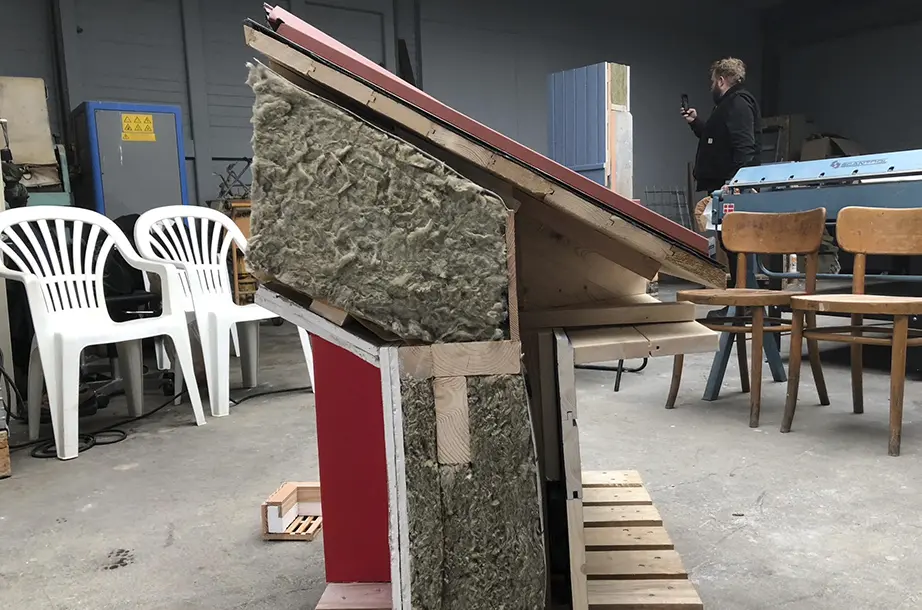
As part of a project, architecture students at The Royal Danish Academy in Kalundborg are tasked with creating a “biopsy” of a building. They do this as part of a third-semester course in which they learn about different materials and how houses and buildings are put together.
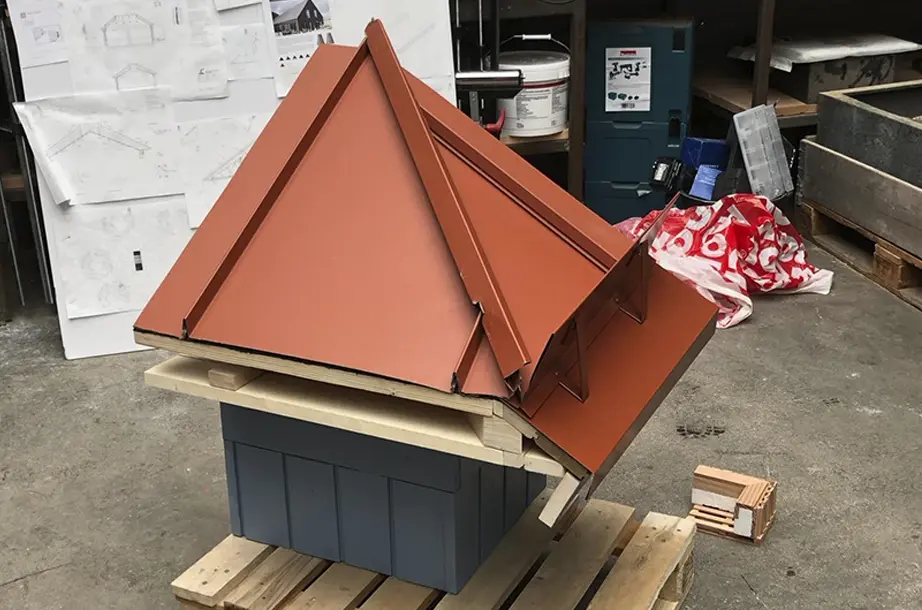
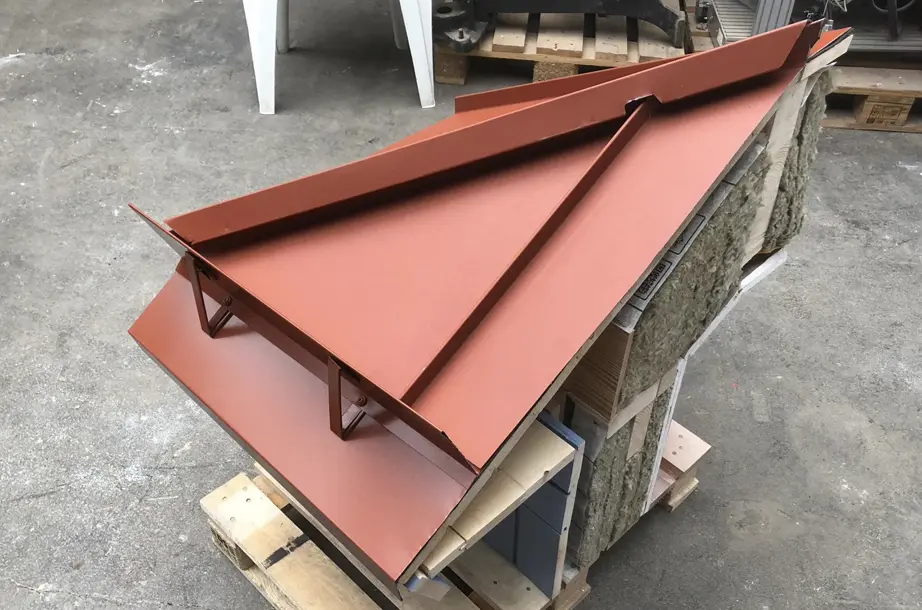
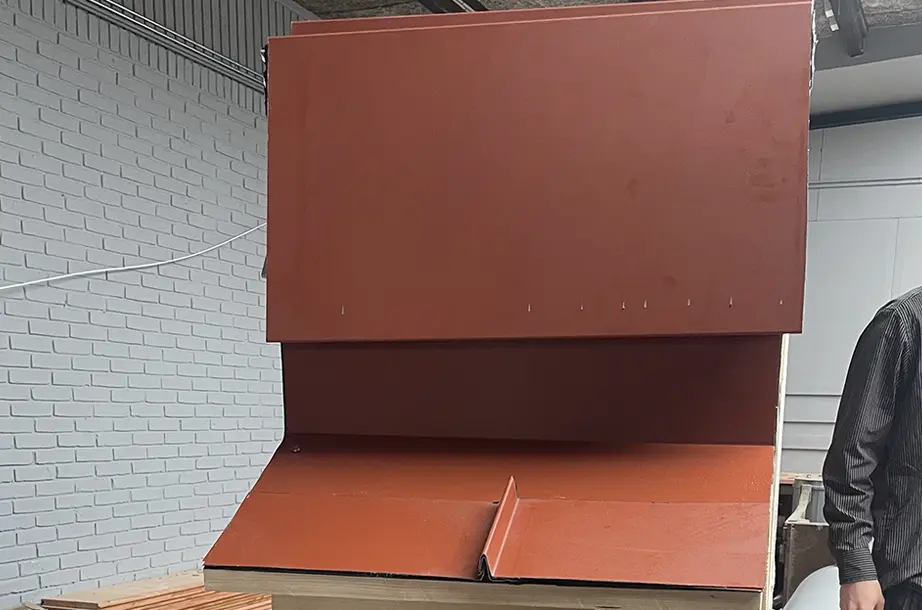
“The idea is that you should be able to see what the building is made of. You can see every layer, including timber rafters, metal rafters, roofing felt, insulation and everything else, so it is like cutting out a section of the building and using the same materials as in the real building,” says architecture student Carla Stabell.
Together with her class, she was tasked with creating 1:1 mock-ups of the building “A House for Two Ferraris” on half-sized pallets. Designed by Anders Behrensson, the building is a double garage created for two exclusive Ferraris, with several of its interior details finished in matching shades of red.
Carla Stabell’s group chose a section of the roof that includes the ridge and a skylight. As steel profiles are used for the roof cladding, her group contacted DS Stålprofil for materials.
DS Stålprofil has chosen to sponsor the brick-red Nordic Click Seam 475 steel profile for Carla Stabell’s study group and one of the other groups in the class, allowing them to work with realistic materials. Otherwise, the students would have had to pay for the profiles themselves.
“Having the materials sponsored means a great deal because they are expensive, and we live on student grants. Some things could not be sponsored, so we had to choose cheaper alternatives, but when materials are sponsored, we get exactly the right ones, which also gives us a better understanding of how buildings are constructed,” says Carla Stabell.
However, only a small part of the building section is clad with Nordic Click Seam.
“We have not had the full experience of how Nordic Click Seam works, as it also needed considerable trimming. But where it had to click together, it worked extremely well,” explains Carla Stabell.
The photos shown here were taken by the students Carla Stabell, Andreas Kjøller Christensen and Emil Temim.
Careers
25 Nov 2026
News
16 Nov 2026
News
30 Sep 2026
News
29 Apr 2026
News
10 Mar 2026